Air
Cooling, heating, ducts, returns, filtration, condensate, thermostats, equipment match, and HERS or energy-code readiness when required.
We modernize the systems that keep San Gabriel Valley basin and East/Northeast LA river-corridor homes safe, efficient, and ready for the next permit. The work starts with a retrofit check: air, power, water, access, utility, and inspection sequence.
This is not a thin lead page. It is a field manual for homeowners who need AC repair, heat pumps, panel upgrades, EV chargers, water heaters, drains, leaks, sewers, and emergency triage without three disconnected scopes fighting each other.
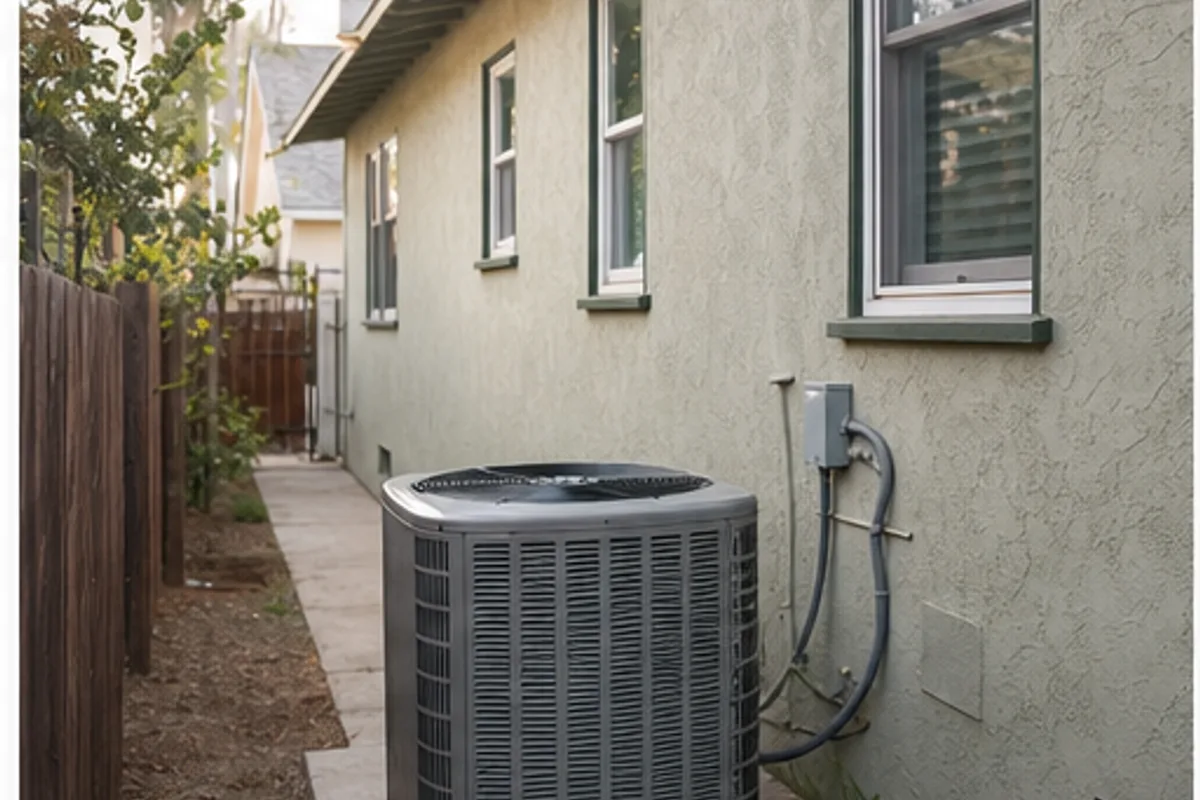
A failed condenser may be an airflow issue. A tankless upgrade may be a gas, venting, water-quality, and electrical issue. An EV charger may be a panel, meter, trench, rebate, and garage-route issue. The site architecture mirrors that field reality.
Cooling, heating, ducts, returns, filtration, condensate, thermostats, equipment match, and HERS or energy-code readiness when required.
Panel capacity, breakers, grounding, GFCI/AFCI protection, EV charging, heat-pump loads, HPWH support circuits, and utility coordination.
Water heaters, shutoffs, pressure, leaks, drains, sewer laterals, venting, seismic strapping, pipe material, and fixture condition.
Competitors in the San Gabriel Valley usually lead with fast repair, coupons, emergency service, or broad "family-owned" trust claims. Those can matter, but they do not answer the homeowner's harder question: what else has to be true for the repair to work and pass cleanly?
Our pages put permit authority, utility provider, access route, older-home material, city context, cost drivers, and inspection checkpoints directly into the commercial content. That gives search engines, answer engines, and homeowners a clearer entity: a local multi-trade planning company for older basin homes.
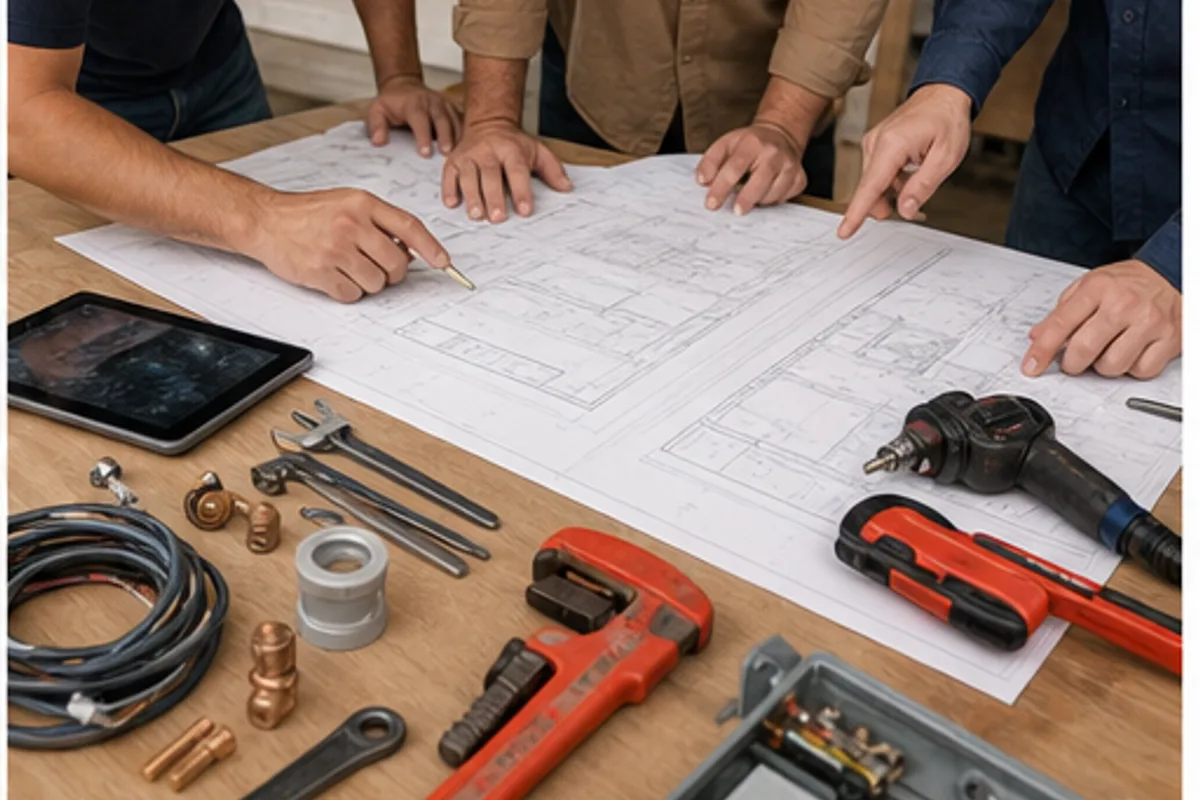
diagnose weak cooling, breaker trips, frozen coils, condensate trouble, and failed components before recommending replacement
HVACreplace worn condensers and air handlers with current-compliant equipment, duct and electrical checks, and inspection-ready documentation
HVACplan heating and cooling electrification with panel capacity, duct condition, utility rebate documentation, and permit path in mind
HVACrepair gas furnaces, wall heaters, ignition issues, blower faults, safety switches, venting concerns, and comfort problems
HVACinstall ductless zoning for additions, bedrooms, garages, ADUs, duplex units, and rooms that existing ducts do not serve well
HVACfind duct leakage, crushed runs, undersized returns, uneven rooms, attic heat gain, and comfort problems before equipment is blamed
HVACimprove filtration, ventilation, humidity control, odors, dust, and system cleanliness with HVAC-compatible upgrades
HVACrepair and upgrade thermostats, controls, zone wiring, low-voltage faults, smart controls, and heat-pump settings
HVACtriage no-cooling, no-heat, burning smells, water around equipment, breaker trips, and unsafe furnace concerns
Electricalupgrade or replace unsafe, full, obsolete, or undersized panels for AC, heat pumps, EV chargers, HPWHs, ADUs, and remodel loads
Electricalinstall Level 2 EV charging with load calculation, circuit planning, panel-readiness review, utility rebate awareness, and permit-ready scope
Electricalrepair dead outlets, warm switches, tripping GFCIs, loose devices, old boxes, and unsafe splices
The city set intentionally differs from prior sites. It avoids coastal corrosion as the main idea, foothill wildfire framing, dense condo dispatch, San Fernando Valley heat-belt identity, Gateway slab-leak identity, and premium Westside HVAC brand comparison.
narrow driveways, rear garages, mixed crawlspace and slab access
San Gabriel Valley basinsteeper streets, tight garages, and utility closets
San Gabriel Valley basincrawlspaces, detached garages, side-yard condensers, and alley access
San Gabriel Valley basinrear-yard water heaters, tight parking, and shared drive approaches
San Gabriel Valley basinside yards, detached garages, and attic ducts
Arroyo and SGV edgesensitive finishes, tight crawlspaces, and construction-hour rules
East/Northeast LA river-corridorsteep approaches, narrow drives, crawlspaces, and older panels
East/Northeast LA river-corridorbasements, crawlspaces, alleys, and tight parking
LA River corridoralley access, crawlspaces, steep side yards, and old service equipment
LA River corridoralley garages, compact side yards, and crawlspace entries
LA River corridordetached garages, side-yard condensers, and alleys
Northeast LA edgesteeper lots, attic ducts, crawlspaces, and narrow streets
Arroyo and Northeast LAplaster walls, crawlspaces, alley parking, and older services
Northeast LA and SGV edgeside-yard condensers, older panels, and attic duct runs
Arroyo and Northeast LAsteep access, crawlspaces, and long service routes
Northeast LA ridge and river edgesteep drives, limited parking, and exterior equipment placement constraints
Arroyo pocketcompact yards, crawlspaces, and shared street parking
Highland Park/Arroyo pocketcrawlspaces, old service panels, and sensitive finish repair
Arroyo corridorvariable jurisdiction, slopes, and older drainage paths
SGV and Arroyopermit-sensitive remodels, old panels, plaster, and crawlspaces
SGV basinside yards, attic ductwork, and garage water heaters
SGV basinlong service routes, finish protection, and quiet exterior placement
SGV basin pocketmixed utility authority, rear-yard equipment, and tight parking
SGV basinside-yard condensers, garages, and long plumbing runs
Each city and city-service page includes a local quick answer, practical system context, permit and utility notes, access details, service-specific risk, cost drivers, homeowner checklist, visible reviews, FAQs, nearby pages, related services, and source links. The pages are long because the subject deserves it, not because a city name was swapped into a paragraph.
Phone, address, and dispatch hours are pulled from one central config so every page surfaces the same NAP. The booking CTA always goes to the external Nexfield URL. There is no invented license number on the page, no fake internal form, and no fabricated contractor credential.
Every home is different, but the older 1920s–1970s housing stock in San Gabriel Valley basin and Northeast LA river-corridor neighborhoods tends to follow a recognizable retrofit sequence. Skipping a step usually means re-opening walls, calling LADWP twice, or paying for permits that should have stacked into one packet.
| Step | What it does | What it unlocks next |
|---|---|---|
| 1. Panel + service capacity audit | Map existing service amperage, breaker space, brand (Zinsco / FPE / GE / Square D / Eaton), grounded-neutral bond, and grounding electrode condition. | Heat-pump support, EV charging, HPWH, induction range, and ADU subpanel routing. |
| 2. Duct and return baseline | Static-pressure measurement, return-grille sizing, leak test, and Manual D check on existing trunk. | Right-sized AC or heat-pump replacement (Manual J), filtration upgrade without choking the blower, and accurate HERS sample paperwork. |
| 3. Water service + main shutoff verification | Test main valve, check pressure (PRV per CPC §606.2), check for galvanized-to-copper transitions, and locate cleanout access. | Repipe sequencing, water-heater replacement, fixture upgrades, and tankless-versus-HPWH decisions with confident pressure data. |
| 4. Sewer lateral camera evidence | RIDGID SeeSnake CS65X from upstream cleanout to the city tap to document material, slope, bellies, root intrusion, and offsets. | Spot repair vs CIPP liner vs pipe-burst decision; permit path through LADBS, Pasadena Permit Center, or LA County Express Permit becomes obvious instead of guesswork. |
| 5. Heat-pump or AC equipment selection | AHRI matched ratings, refrigerant transition (EPA HFC R-454B), Title 24 Part 6 §150.2(b) alteration path. | LADWP, SCE, or PWP rebate eligibility; HERS field verification; correct condensate route and disconnect placement. |
| 6. Indoor-air quality envelope | Filtration cabinet sizing for MERV 13 without restricting blower; ASHRAE 62.2-2022 ventilation-rate compliance after envelope tightening. | Smoke-event response plan, allergy-aware register placement, and avoidance of useless UV gadgets sold as filtration substitutes. |
The first three steps are usually inexpensive measurement work — a few hundred dollars in field labor, not five-figure projects. Doing them before approving a major equipment replacement is what separates a planning visit from a sales visit.
The basin is its own service territory. Alhambra, Monterey Park, San Gabriel, Rosemead, Temple City, South Pasadena, Pasadena, San Marino, Arcadia, El Monte, and the LA County pockets like Mayflower Village and East San Gabriel sit on a flat-to-rolling alluvial plain with predictable summer heat, winter overnight lows in the high 30s, dust load from the freeway and rail corridors, and a housing stock that mixes 1910s craftsman through 1970s ranch additions on the same block.
The river-corridor side — El Sereno, Lincoln Heights, Cypress Park, Elysian Valley, Atwater Village, Glassell Park, Highland Park, Eagle Rock, Mount Washington, Garvanza, Hermon, Boyle Heights, City Terrace, East Los Angeles — adds steep streets, hillside-edge lots, alley access, narrow side yards, and original cast-iron sewer laterals running under driveways before reaching the public main.
Permit authority changes by address. LADBS handles the City of Los Angeles cities (El Sereno, Lincoln Heights, Highland Park, Atwater Village, Boyle Heights). Pasadena Permit Center handles Pasadena and South Pasadena. Each smaller city — Alhambra, Monterey Park, San Gabriel, Arcadia, El Monte, Monrovia, Covina, West Covina — has its own building division with its own plan-check rhythm and inspector culture. LA County Building and Safety covers the unincorporated pockets via the Express Permit pathway when scope qualifies.
Utility coverage is similarly mixed: LADWP electric and water in the City of LA neighborhoods; Pasadena Water and Power in Pasadena; SCE electric and SoCalGas gas across the SGV. Heat-pump, HPWH, and EV charger rebates depend on which utility owns the meter, and that question must be answered before equipment is purchased.
Each review is also emitted in the page JSON-LD with a 1:1 match between visible and structured-data text. Author names use first name and last initial only, and ratings reflect the actual review (some 4-star reviews are included where homeowners flagged a real complaint that was resolved).
Replaced a 5-ton beast with a properly sized 3.5-ton Carrier Infinity 26 after the load calc came back honest. Title 24 Part 6 §150.2(b) alteration path was followed, HERS rater showed up on schedule, and the duct leakage test passed at the threshold. Crew protected the floors and the new whip and disconnect re-routed off the side-yard fence looks tidy. Whole-house feels more even now.
We were ready to electrify before the gas furnace finally died. Crew did a Manual J load calc that came in lower than the old 80k BTU system suggested, then sized a 3.5-ton heat pump accordingly. PWP Electrify Your Home rebate paperwork was filed by their office and the LADBS mechanical permit closed without a re-inspection. Madison Heights house is holding 70 degrees on the cold mornings without aux strips kicking in.
Recessed retrofit and Lutron Caseta on 18 zones. Sounds simple but the 1958 K&T behind the ceilings had to come out first, which became a partial rewire of the second floor. They handled the plaster patches in-house and matched the original sand-finish texture. Three weeks instead of one, but the right call.
Navien NPE-240A2 install. Gas resize, 120V outlet, vent, condensate neutralizer, all clean. Star off because the original quote did not include the gas resize and the change order added $640 mid-project. Talia explained why, the original site survey missed the meter run length, and she split the difference at $320. The fix was real and so was the apology.
Older SGV and Northeast LA homes often have connected constraints. A heat pump may need panel capacity, a water-heater change may need venting or electrical work, and an AC leak may be condensate plumbing rather than refrigerant.
No. Booking uses the external scheduler at https://nexfield.pro/crm/book?u=205. The site does not create a fake internal booking form.
Standard dispatch is Monday–Friday 7:00 AM to 7:00 PM and Saturday 8:00 AM to 4:00 PM. After-hours emergency triage available 7 days a week for active leaks, sparking panels, no-cooling, no-heat, and gas-appliance concerns.
License documentation is shared during the booking flow once a scope has been agreed. Inspector-facing paperwork (LADBS, Pasadena Permit Center, LA County Building and Safety) lists the responsible licensed contractor for the specific permit pulled.
Send the symptom, equipment photos, panel photo, shutoff location, access constraints, and urgency. The booking path stays external so there is no fake form and no invented phone number.