HVAC in Cypress Park
Cooling and heating work should account for duct age, return sizing, condenser placement, thermostat wiring, condensate, and panel capacity.
Local answer: Cypress Park homes need air, power, and water repairs that respect LADBS, LADWP electric and water with SoCalGas, and the realities of river-adjacent bungalows, duplexes, hillside pockets, and mixed-age remodels.
Access matters here: alley access, crawlspaces, steep side yards, and old service equipment. That affects how a technician stages ladders, drain equipment, conduit, refrigerant lines, shutoff tools, water-heater parts, camera gear, or panel work.
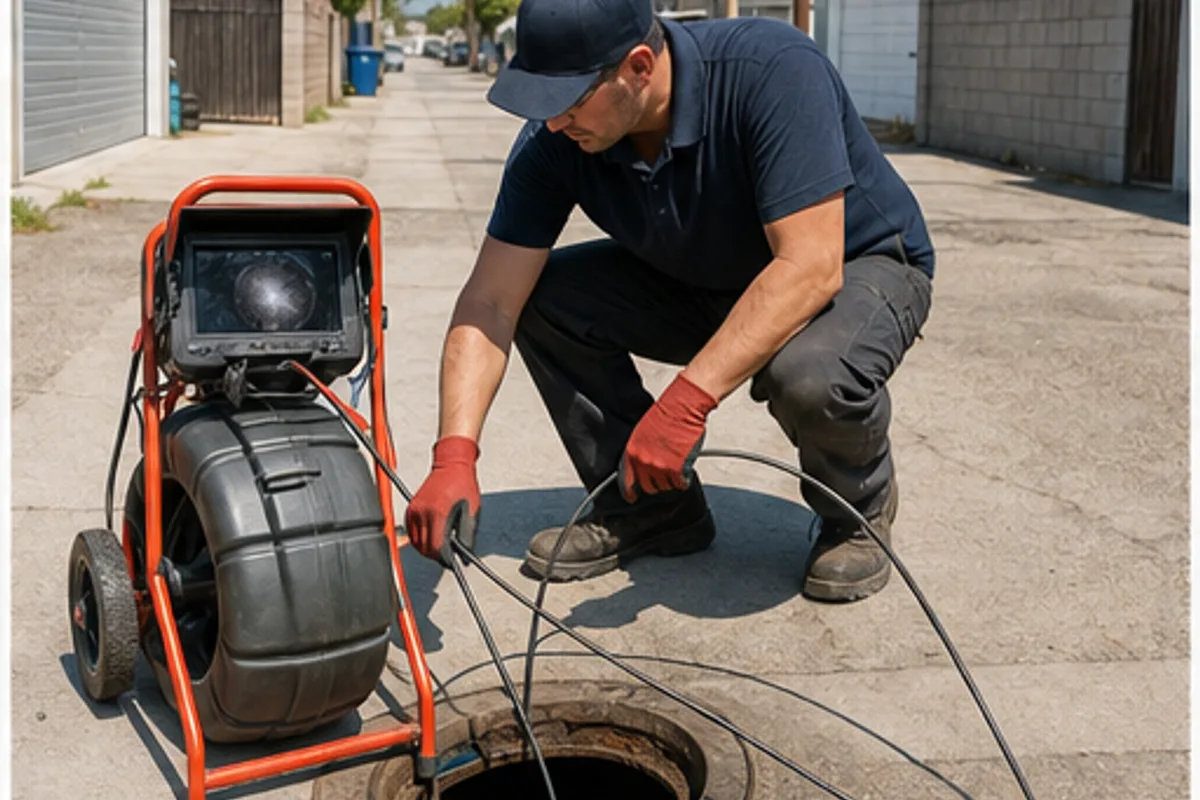
drain, moisture, and access details can change plumbing and HVAC scope quickly. That single local detail changes how estimates should be written. A vague "repair near me" quote is weaker than a scope that notes the authority, utility, equipment location, access, shutoffs, and whether the work may be concealed before inspection.
Many homes in this region were built or remodeled across different eras. A property can have old ducts, a newer condenser, a full panel, partial repiping, old drains, a recent water heater, and unmarked breakers all at once. The visit has to identify the real failure without accidentally creating a bigger one.
Cooling and heating work should account for duct age, return sizing, condenser placement, thermostat wiring, condensate, and panel capacity.
Panel, EV charger, rewiring, circuit, outlet, and lighting scopes need load, route, grounding, and utility coordination checks.
Water heater, drain, sewer, leak, repipe, and fixture repairs should start with shutoffs, pipe material, venting, and cleanout access.
Era and stock: Cypress Park developed between 1900 and 1925 as a streetcar suburb served by the Yellow Car line down Cypress Avenue. Most homes are modest Craftsman bungalows and California vernacular cottages built for railroad and lumberyard workers servicing the adjacent Taylor Yard. A second infill wave in the 1940s added Spanish Revival duplexes.
Housing mix: Compact 800-1,100 sq ft bungalows on 4,500-5,500 sq ft hillside-adjacent lots, many with detached garages opening to rear alleys. Sloped backyards mean retrofit jobs frequently involve cripple-wall foundation work alongside the HVAC and electrical scope.
Streets and landmarks: Cypress Avenue is the spine, with Figueroa Street defining the western edge along the river. The Rio de Los Angeles State Park and the old Taylor Yard locomotive shop define the southern boundary -- most older housing sits between Cypress Avenue and Division Street up the hillside toward Mount Washington.
What drives most retrofits here: Hillside-adjacent parcels mean tight side yards and frequent service drop relocations during ADU conversions. Add the post-2018 wave of investor flips, which routinely uncover concealed knob-and-tube spliced into 1980s Romex inside the same junction box -- a code violation that triggers full house rewire scope under LADBS interpretation.
Permit gotcha for Cypress Park: Cypress Park parcels above the 500-foot contour can trip the Baseline Hillside Ordinance even when the building footprint is flat, because BHO scoring includes the entire lot. Verify your slope calc before submitting, or you'll get bounced from Express Permit into full plan check with a 6-8 week delay.
Local conditions in Cypress Park change estimates more than most homeowners realize. The cluster is LA River corridor. Permit authority sits with LADBS. Utility context is LADWP electric and water with SoCalGas. Housing stock here is river-adjacent bungalows, duplexes, hillside pockets, and mixed-age remodels, and access is the deciding factor: alley access, crawlspaces, steep side yards, and old service equipment.
drain, moisture, and access details can change plumbing and HVAC scope quickly. That single detail is why a quote written off an address in Cypress Park should look different from the same job in a tract subdivision twenty minutes away. The visit prep should reflect that.
| Trade | Most common Cypress Park retrofit driver | Permit / authority touchpoint |
|---|---|---|
| HVAC | For AC replacement in Cypress Park, the estimate should not start with tonnage alone. | LADBS mechanical permit; CEC 2025 Energy Code applies to permit applications dated on or after January 1, 2026. |
| Electrical | For an electrical panel upgrade in Cypress Park, the estimate should map loads and future loads before anyone promises a panel size. | LADBS electrical or combination permit; utility coordination via LADWP electric and water with SoCalGas. |
| Plumbing | For repiping in Cypress Park, the quote should describe pipe material, access, fixture count, shutoff strategy, patching, pressure issues, water-heater connection, and inspection sequencing. | LADBS plumbing permit; LACoPW lateral connection oversight on sewer scope when applicable. |
Each review is also emitted in the page JSON-LD with a 1:1 match between visible and structured-data text. Author names use first name and last initial only, and ratings reflect the actual review (some 4-star reviews are included where homeowners flagged a real complaint that was resolved).
Five dead outlets traced back to a single failed daisy chain at one upstream receptacle that had lost its neutral. Tech found it in 20 minutes with a tone tracer, replaced the failed device with a Hubbell DR15F2WBKZ, and tested every box on the circuit. No upselling, just fixed what was broken.
Generac 22kW air-cooled standby with an automatic transfer switch. Crew coordinated the gas supply with the plumbing team in-house, which made the schedule a lot easier. NEC 110.26 working clearance was respected and the concrete pad placement was thoughtful. Self-test runs Wednesday morning, neighbors haven't complained.
Two AFCI breakers nuisance-tripping in bedrooms. Tech tracked it down to a shared neutral between two circuits in a multiwire branch that had been wired wrong. Re-paired the hots so the neutrals balanced, swapped both AFCIs, and the trips stopped. Knew exactly what he was looking at.
Older SGV and Northeast LA homes often have connected constraints. A heat pump may need panel capacity, a water-heater change may need venting or electrical work, and an AC leak may be condensate plumbing rather than refrigerant.
No. Booking uses the external scheduler at https://nexfield.pro/crm/book?u=205. The site does not create a fake internal booking form.
Standard dispatch is Monday–Friday 7:00 AM to 7:00 PM and Saturday 8:00 AM to 4:00 PM. After-hours emergency triage available 7 days a week for active leaks, sparking panels, no-cooling, no-heat, and gas-appliance concerns.
License documentation is shared during the booking flow once a scope has been agreed. Inspector-facing paperwork (LADBS, Pasadena Permit Center, LA County Building and Safety) lists the responsible licensed contractor for the specific permit pulled.
Send the symptom, equipment photos, panel photo, shutoff location, access constraints, and urgency. The booking path stays external so there is no fake form and no invented phone number.