Air emergency
No cooling, no heat, water at the air handler, burning smell, frozen coil, breaker trip, failed thermostat, or unsafe furnace symptom.
Emergency pages are useful only if they help the homeowner reduce danger and document the right details. This hub covers no cooling, no heat, hot panels, wet outlets, active leaks, sewer backups, no hot water, and unsafe gas-appliance symptoms.
No cooling, no heat, water at the air handler, burning smell, frozen coil, breaker trip, failed thermostat, or unsafe furnace symptom.
Sparking, hot panel, partial outage, wet outlet, repeated breaker trip, burning odor, or visible damage near service equipment.
Active leak, failed shutoff, sewer backup, no hot water, burst pipe, water-heater leak, or fixture overflow.
| Symptom | Do first | Do not do |
|---|---|---|
| Gas smell | Leave the area and contact the utility or emergency services from a safe location. | Do not switch lights, use flames, or stay inside. |
| Wet electrical | Stay away, isolate if safe, and send photos from distance. | Do not touch wet panels, outlets, or cords. |
| Active leak | Use the main or fixture shutoff if safe and document the source. | Do not wait for ceiling staining to spread. |
| Sewer backup | Stop using fixtures and locate cleanout access. | Do not keep flushing or running laundry. |
triage no-cooling, no-heat, burning smells, water around equipment, breaker trips, and unsafe furnace concerns
Electricalrespond to sparking, hot panels, partial power loss, wet outlets, breaker failures, and unsafe wiring symptoms
Plumbingtriage burst pipes, active leaks, sewer backups, no hot water, overflowing fixtures, gas-water-heater concerns, and shutoff failures
The protocols below are written so a homeowner can act before the technician arrives. They are not a substitute for professional response — they are the first 15 minutes between identifying a failure and the truck reaching the curb.
| Failure | Stop these | Do these | Photograph these for dispatch |
|---|---|---|---|
| Suspected gas leak | Switching lights or breakers; using flames, vehicles, or appliances; cell-phone use inside the structure. | Leave the building. Call SoCalGas emergency line and 911 from outside. Open windows from a safe distance only if it is fast and safe. | Do NOT stay inside to photograph. After the utility clears the building, photograph the gas meter, regulator, water-heater closet, and any flexible connectors. |
| Active water leak (supply or pressurized) | Continued use of the affected fixture; running washing machines or dishwashers; resetting tripped breakers in wet zones. | Close the main shutoff. If the main fails, use the LADWP key at the meter (a long T-handle for the curb stop). Isolate the water heater at its dedicated stop. | Main shutoff condition, water-heater pan, ceiling staining, fixture-side shutoffs, and any electrical equipment within splash range. |
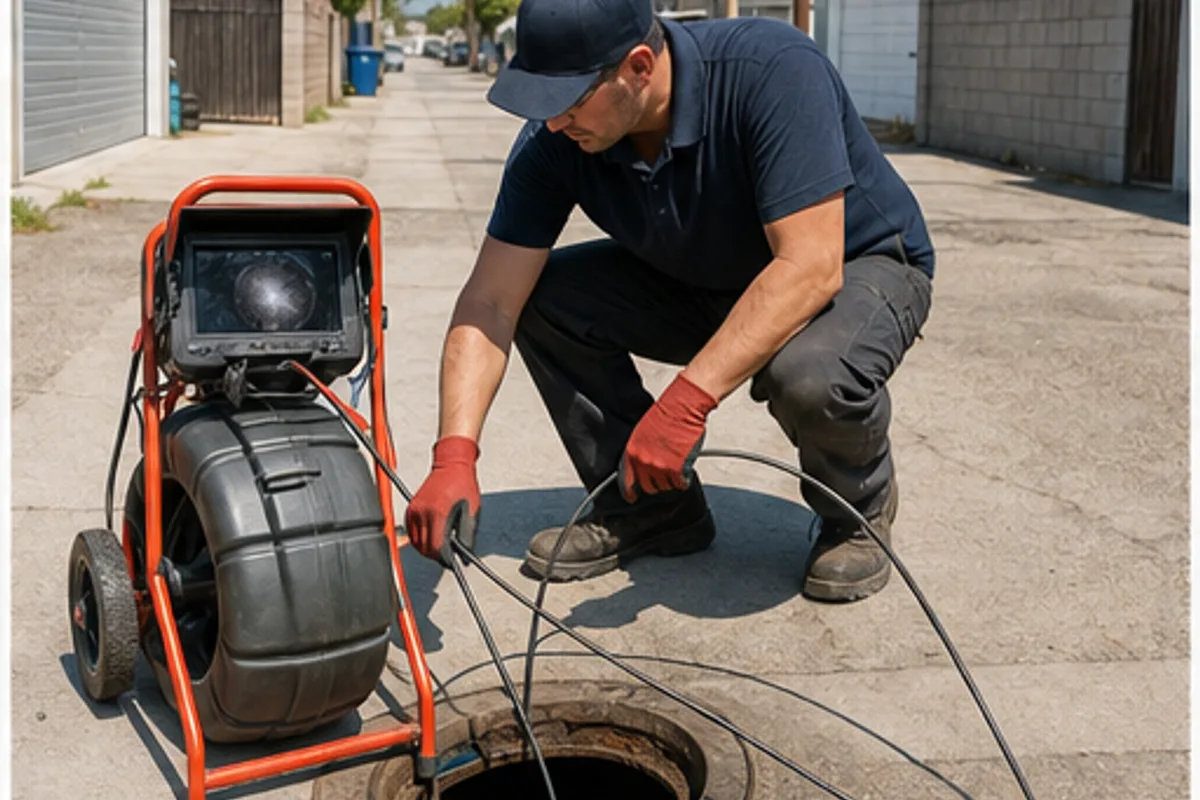
| Sewer backup | All toilet flushing, laundry, dishwasher, and shower use until the line is verified clear. Continued use compounds the cleanup. | Locate the property-line cleanout (often capped with brass or PVC under landscaping). Clear access for a 75-foot cable. Shut off any auto-running irrigation. | Cleanout cap, affected fixtures (which ones backed up — that tells the technician the depth), backflow stains on the lowest fixture, and any prior camera reports. |
| Hot panel or sparking outlet | Using devices on the affected circuit; resetting breakers more than once; continuing to draw load. | De-energize at the main if the panel itself is the source. Stay at least 6 feet back if smoke or popping is present. Do not touch wet electrical equipment. | Panel cover (closed), the breaker handle position, any visible burn marks, and the immediate environment (water, fuel, finished basement, etc.). |
| No-cooling during heat advisory | Repeated thermostat adjustments; continuous compressor cycling on a tripped breaker; running with frozen coil. | Set system to fan-only to keep air moving. Open lower-floor windows after dusk. Move occupants to the cooler side of the house. | Outdoor condenser (with disconnect open if safe), indoor air handler, thermostat screen, breaker labels, and the float-switch / condensate trap area. |
| No-heat with combustion concern | Re-igniting a furnace that locked out repeatedly; using ovens or stoves to heat the home; sleeping near a wall heater that smells of combustion gas. | Set thermostat to off. Open windows in the affected room. Use space heaters on dedicated circuits only. Test CO alarms. | Furnace nameplate, vent connector clearance, flame appearance through the inspection port (only if it can be seen safely), and the immediate environment. |
We will not replace major equipment on the same call as triage unless the homeowner specifically authorizes it after the failure cause is documented. The reason is permit and inspection sequence: a heat-pump replacement, a tankless retrofit, or a panel upgrade installed inside an emergency window without LADBS or Pasadena Permit Center plan check is the kind of work that gets caught at sale time and forced to be redone.
Stabilize, document, and propose the proper sequence. That usually means restoring partial service — a working circuit, a temporary water-heater fix, a furnace lockout reset with combustion verification — and writing a scoped quote for the planned replacement that respects permit, utility coordination, rebate paperwork, and inspection timing. Emergency work and planned work are different products.
Each review is also emitted in the page JSON-LD with a 1:1 match between visible and structured-data text. Author names use first name and last initial only, and ratings reflect the actual review (some 4-star reviews are included where homeowners flagged a real complaint that was resolved).
We just wanted a Tesla Wall Connector Gen 3 in the driveway. Talia caught that our 1956 Zinsco panel could not safely add a 60A two-pole with the existing AC and range load. Walked us through NEC 220.83 service load math at the kitchen table, recommended a 200A Square D QO upgrade first, then a 48A continuous EV circuit. SCE Charge Ready Home rebate forms came pre-populated. The crew protected the hardwood with ram board the entire route from the panel to the garage.
Half the house went dark Saturday night. Tech was here Sunday morning early, found a failed split-bus tie at the panel, stabilized it on a single feed while we waited for the LADWP cut-in card to swap the meter. Total downtime was less than 24 hours and they kept us informed every step.
80 percent furnace was rolling out flame on startup. Tech pulled the burners, cleaned them properly, replaced the flame sensor, and verified manifold pressure at the gas valve. Combustion analyzer showed CO under threshold after. Lower Hastings home, no upsell to a new system even though the unit is 15 years old. He flagged what to watch for next winter and that was that.
Older SGV and Northeast LA homes often have connected constraints. A heat pump may need panel capacity, a water-heater change may need venting or electrical work, and an AC leak may be condensate plumbing rather than refrigerant.
No. Booking uses the external scheduler at https://nexfield.pro/crm/book?u=205. The site does not create a fake internal booking form.
Standard dispatch is Monday–Friday 7:00 AM to 7:00 PM and Saturday 8:00 AM to 4:00 PM. After-hours emergency triage available 7 days a week for active leaks, sparking panels, no-cooling, no-heat, and gas-appliance concerns.
License documentation is shared during the booking flow once a scope has been agreed. Inspector-facing paperwork (LADBS, Pasadena Permit Center, LA County Building and Safety) lists the responsible licensed contractor for the specific permit pulled.