HVAC in South Pasadena
Cooling and heating work should account for duct age, return sizing, condenser placement, thermostat wiring, condensate, and panel capacity.
Local answer: South Pasadena homes need air, power, and water repairs that respect South Pasadena Building Division, SCE, SoCalGas, and local water service context, and the realities of historic homes, plaster interiors, garages, bungalows, and hillside-edge lots.
Access matters here: sensitive finishes, tight crawlspaces, and construction-hour rules. That affects how a technician stages ladders, drain equipment, conduit, refrigerant lines, shutoff tools, water-heater parts, camera gear, or panel work.
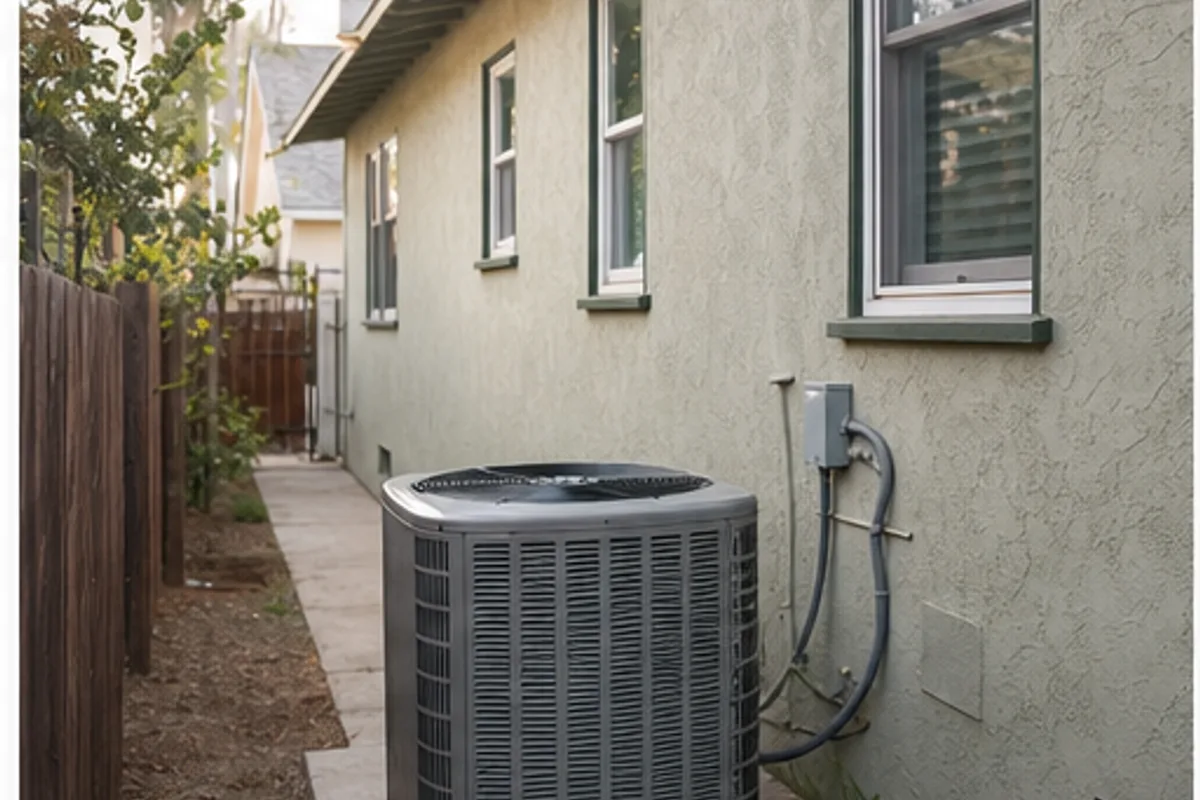
mechanical, electrical, and plumbing applications and plan-check timing should be understood before opening walls. That single local detail changes how estimates should be written. A vague "repair near me" quote is weaker than a scope that notes the authority, utility, equipment location, access, shutoffs, and whether the work may be concealed before inspection.
Many homes in this region were built or remodeled across different eras. A property can have old ducts, a newer condenser, a full panel, partial repiping, old drains, a recent water heater, and unmarked breakers all at once. The visit has to identify the real failure without accidentally creating a bigger one.
Cooling and heating work should account for duct age, return sizing, condenser placement, thermostat wiring, condensate, and panel capacity.
Panel, EV charger, rewiring, circuit, outlet, and lighting scopes need load, route, grounding, and utility coordination checks.
Water heater, drain, sewer, leak, repipe, and fixture repairs should start with shutoffs, pipe material, venting, and cleanout access.
Era and stock: South Pasadena incorporated in 1888 as one of the oldest cities in LA County, and its housing stock is dominated by the 1900-1930 Craftsman and Spanish Revival waves. A smaller mid-century band runs through the Monterey Hills edge, but most of the city is pre-1940 with strict historic-character protections that have limited teardowns since the 1990s.
Housing mix: Two-story Craftsman and American Foursquare homes on 60x150 lots dominate the central grid, with 1920s Spanish Revival and English Tudor pockets near the Mission Street corridor, a band of 1930s and 1940s minimal-traditional cottages, and a small share of mid-century homes along the Arroyo Seco edge.
Streets and landmarks: Mission Street, Fair Oaks Avenue, and Fremont Avenue frame the historic core, with the blocks around Garfield Park, Library Park, and the Marengo Avenue corridor carrying the densest pre-1920 stock. The Mission Street Gold Line station anchors the historic commercial spine.
What drives most retrofits here: South Pasadena's pre-1940 Craftsman stock drives the heaviest combined-trade retrofit work in the SGV: original galvanized supply, cast-iron drains hitting 90 years old, two-wire knob-and-tube branch circuits, and 60-100A services that cannot host modern loads. Whole-house repipes plus 200A service upgrades plus mini-split additions are a near-standard scope.
Permit gotcha for South Pasadena: South Pasadena Building Division on Mission Street routes nearly all exterior-visible work through a Cultural Heritage Commission review, which typically adds 4-8 weeks. Even like-for-like window or panel relocations on street-facing elevations can trigger the review, so most contractors stage panel and HVAC condenser placements to side or rear yards from the start.
Local conditions in South Pasadena change estimates more than most homeowners realize. The cluster is Arroyo and SGV edge. Permit authority sits with South Pasadena Building Division. Utility context is SCE, SoCalGas, and local water service context. Housing stock here is historic homes, plaster interiors, garages, bungalows, and hillside-edge lots, and access is the deciding factor: sensitive finishes, tight crawlspaces, and construction-hour rules.
mechanical, electrical, and plumbing applications and plan-check timing should be understood before opening walls. That single detail is why a quote written off an address in South Pasadena should look different from the same job in a tract subdivision twenty minutes away. The visit prep should reflect that.
| Trade | Most common South Pasadena retrofit driver | Permit / authority touchpoint |
|---|---|---|
| HVAC | For AC replacement in South Pasadena, the estimate should not start with tonnage alone. | South Pasadena Building Division mechanical permit; CEC 2025 Energy Code applies to permit applications dated on or after January 1, 2026. |
| Electrical | For an electrical panel upgrade in South Pasadena, the estimate should map loads and future loads before anyone promises a panel size. | South Pasadena Building Division electrical or combination permit; utility coordination via SCE, SoCalGas, and local water service context. |
| Plumbing | For repiping in South Pasadena, the quote should describe pipe material, access, fixture count, shutoff strategy, patching, pressure issues, water-heater connection, and inspection sequencing. | South Pasadena Building Division plumbing permit; LACoPW lateral connection oversight on sewer scope when applicable. |
Each review is also emitted in the page JSON-LD with a 1:1 match between visible and structured-data text. Author names use first name and last initial only, and ratings reflect the actual review (some 4-star reviews are included where homeowners flagged a real complaint that was resolved).
Static was 0.81 in. w.c. before. Crew rebuilt the return drop, added a media cabinet, and swapped the flex runs for properly hung sheet metal where they could. Re-tested at 0.42 in. w.c. of static pressure. Permit through Monterey Park Building and Safety, no callback needed. Even the upstairs bedroom that always lagged now matches the hallway sensor within a degree.
20A dedicated circuit for a wall oven, 30A circuit for a cooktop, and a 20A GFCI for the dishwasher. All three home runs back to the panel through the basement, neat staples, no kinks. Talia ran the load calc against the existing 200A service and confirmed we had headroom. Clean install.
Galvanized had been patched 9 times in the last 4 years. They did a full repipe in 1/2-inch PEX-A home runs, kept 3/4-inch on the trunk, set a new Watts 25AUB-Z3 PRV at 60 PSI because incoming was 84 PSI per CPC §606.2 PRV requirement. Repipe ran 4 days with 6 fixture shutdowns. The patches were minimal and well-placed.
Older SGV and Northeast LA homes often have connected constraints. A heat pump may need panel capacity, a water-heater change may need venting or electrical work, and an AC leak may be condensate plumbing rather than refrigerant.
No. Booking uses the external scheduler at https://nexfield.pro/crm/book?u=205. The site does not create a fake internal booking form.
Standard dispatch is Monday–Friday 7:00 AM to 7:00 PM and Saturday 8:00 AM to 4:00 PM. After-hours emergency triage available 7 days a week for active leaks, sparking panels, no-cooling, no-heat, and gas-appliance concerns.
License documentation is shared during the booking flow once a scope has been agreed. Inspector-facing paperwork (LADBS, Pasadena Permit Center, LA County Building and Safety) lists the responsible licensed contractor for the specific permit pulled.
Send the symptom, equipment photos, panel photo, shutoff location, access constraints, and urgency. The booking path stays external so there is no fake form and no invented phone number.