HVAC in Lincoln Heights
Cooling and heating work should account for duct age, return sizing, condenser placement, thermostat wiring, condensate, and panel capacity.
Local answer: Lincoln Heights homes need air, power, and water repairs that respect LADBS, LADWP electric and water with SoCalGas, and the realities of Victorian-era homes, bungalows, duplexes, old commercial-adjacent buildings, and remodels.
Access matters here: basements, crawlspaces, alleys, and tight parking. That affects how a technician stages ladders, drain equipment, conduit, refrigerant lines, shutoff tools, water-heater parts, camera gear, or panel work.
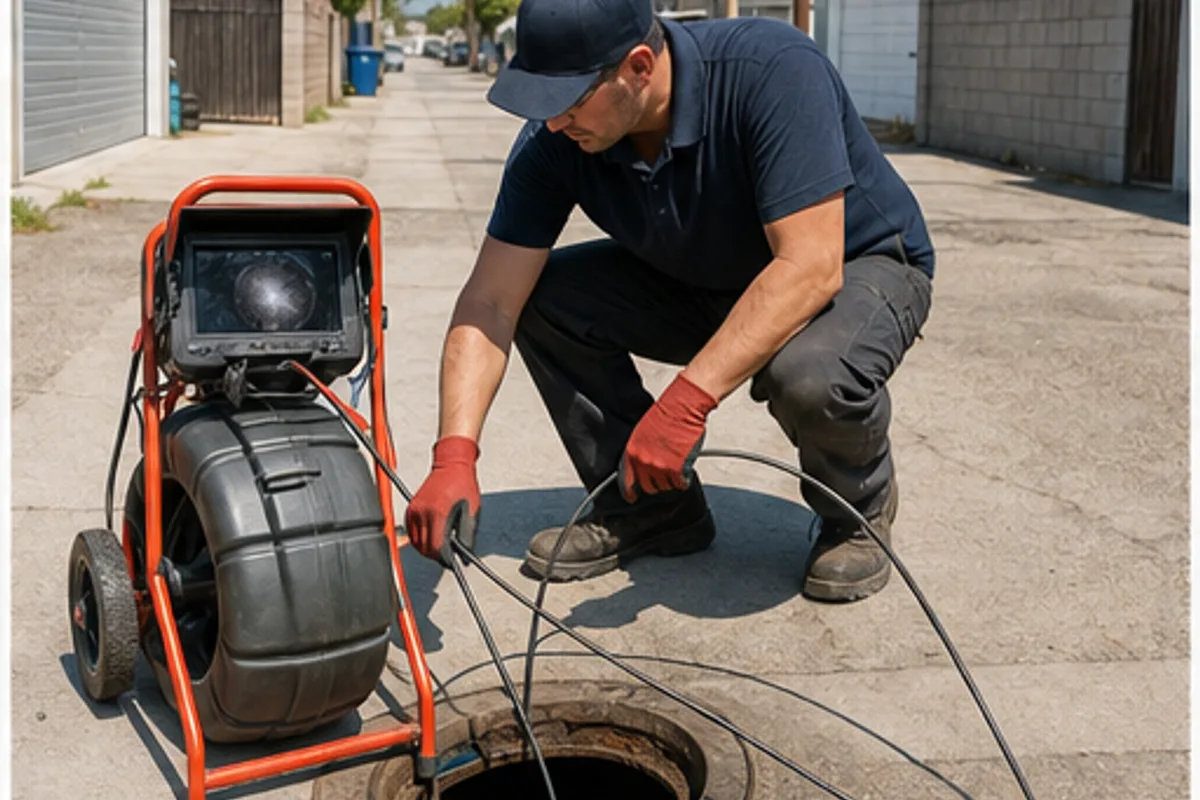
old wiring and sewer routes deserve camera and panel mapping before remodel or equipment replacement. That single local detail changes how estimates should be written. A vague "repair near me" quote is weaker than a scope that notes the authority, utility, equipment location, access, shutoffs, and whether the work may be concealed before inspection.
Many homes in this region were built or remodeled across different eras. A property can have old ducts, a newer condenser, a full panel, partial repiping, old drains, a recent water heater, and unmarked breakers all at once. The visit has to identify the real failure without accidentally creating a bigger one.
Cooling and heating work should account for duct age, return sizing, condenser placement, thermostat wiring, condensate, and panel capacity.
Panel, EV charger, rewiring, circuit, outlet, and lighting scopes need load, route, grounding, and utility coordination checks.
Water heater, drain, sewer, leak, repipe, and fixture repairs should start with shutoffs, pipe material, venting, and cleanout access.
Era and stock: Lincoln Heights is LA's oldest suburb, platted in 1873 as East Los Angeles before being renamed in 1917. Peak residential construction ran 1885-1920, leaving a dense layer of Victorian cottages, Queen Annes on Workman Street, and early Craftsman bungalows -- making it one of the most pre-1920 housing-stock-heavy neighborhoods in the city.
Housing mix: Two- and three-bedroom Victorians and transitional Craftsmans on narrow 30-40 foot lots, many with rear cottages predating the duplex ordinance. Common retrofit candidate is a 1905 single-family with a converted basement, original cast iron drain stack, and a 60-amp fuse panel still wired in cloth-insulated copper.
Streets and landmarks: North Broadway and Pasadena Avenue form the commercial spine, with Workman Street, Griffin Avenue, and the Mission Junction rail district anchoring the historic core. The Lincoln Park lake and the old Lincoln Heights Jail on Avenue 19 sit at the southern edge -- jobs concentrate west of Broadway in the Victorian belt.
What drives most retrofits here: Galvanized supply lines from the 1910s are the number-one call -- pinhole leaks, brown water, and pressure dropping below 40 psi. Combined with knob-and-tube branch circuits buried under three layers of plaster and a gravity-fed sewer lateral that almost always needs hydrojetting before any kitchen remodel can be permitted.
Permit gotcha for Lincoln Heights: No HPOZ here either, but LADBS counter staff flag Lincoln Heights addresses for sewer cap and capacity review since many laterals tie into the original 1890s clay trunk under Broadway. Build a kitchen addition without confirming lateral condition and you'll eat a correction notice from LA Sanitation mid-project.
Local conditions in Lincoln Heights change estimates more than most homeowners realize. The cluster is East/Northeast LA river-corridor. Permit authority sits with LADBS. Utility context is LADWP electric and water with SoCalGas. Housing stock here is Victorian-era homes, bungalows, duplexes, old commercial-adjacent buildings, and remodels, and access is the deciding factor: basements, crawlspaces, alleys, and tight parking.
old wiring and sewer routes deserve camera and panel mapping before remodel or equipment replacement. That single detail is why a quote written off an address in Lincoln Heights should look different from the same job in a tract subdivision twenty minutes away. The visit prep should reflect that.
| Trade | Most common Lincoln Heights retrofit driver | Permit / authority touchpoint |
|---|---|---|
| HVAC | For AC replacement in Lincoln Heights, the estimate should not start with tonnage alone. | LADBS mechanical permit; CEC 2025 Energy Code applies to permit applications dated on or after January 1, 2026. |
| Electrical | For an electrical panel upgrade in Lincoln Heights, the estimate should map loads and future loads before anyone promises a panel size. | LADBS electrical or combination permit; utility coordination via LADWP electric and water with SoCalGas. |
| Plumbing | For repiping in Lincoln Heights, the quote should describe pipe material, access, fixture count, shutoff strategy, patching, pressure issues, water-heater connection, and inspection sequencing. | LADBS plumbing permit; LACoPW lateral connection oversight on sewer scope when applicable. |
Each review is also emitted in the page JSON-LD with a 1:1 match between visible and structured-data text. Author names use first name and last initial only, and ratings reflect the actual review (some 4-star reviews are included where homeowners flagged a real complaint that was resolved).
Rinnai RUR199iN install in a 1958 ranch off Huntington. Gas resize to 3/4 inch from the meter, dedicated 120V outlet, concentric vent. Quote said 2 days, ended up 4 days because plan check kicked it back twice for the condensate neutralizer detail. Talia kept us in the loop with photos at every plan-check trip and did not bill the extra time. Final hot water delivery is 0.4 gpm at 122 degrees on a cold morning.
Older bungalow with a tight crawlspace. They installed a balanced ventilation setup, added an Aprilaire 4400 cabinet for MERV 13, and sealed the major duct leaks while they were in there. ASHRAE 62.2-2022 ventilation rate verified with a flow hood. Hermon neighborhood, less dust in the front rooms within a few weeks. Honest commissioning data left on paper.
Pre-listing inspection found a sag in the 4-inch Schedule 40 ABS at 28 ft. Rather than replace the whole run, they recommended a targeted CIPP liner with the LMK PerformaLine system to bridge the sag and stop the standing water condition. LA County Express Permit drain repair was pulled, post-line camera showed flow restored. Saved a major dig.
Older SGV and Northeast LA homes often have connected constraints. A heat pump may need panel capacity, a water-heater change may need venting or electrical work, and an AC leak may be condensate plumbing rather than refrigerant.
No. Booking uses the external scheduler at https://nexfield.pro/crm/book?u=205. The site does not create a fake internal booking form.
Standard dispatch is Monday–Friday 7:00 AM to 7:00 PM and Saturday 8:00 AM to 4:00 PM. After-hours emergency triage available 7 days a week for active leaks, sparking panels, no-cooling, no-heat, and gas-appliance concerns.
License documentation is shared during the booking flow once a scope has been agreed. Inspector-facing paperwork (LADBS, Pasadena Permit Center, LA County Building and Safety) lists the responsible licensed contractor for the specific permit pulled.
Send the symptom, equipment photos, panel photo, shutoff location, access constraints, and urgency. The booking path stays external so there is no fake form and no invented phone number.