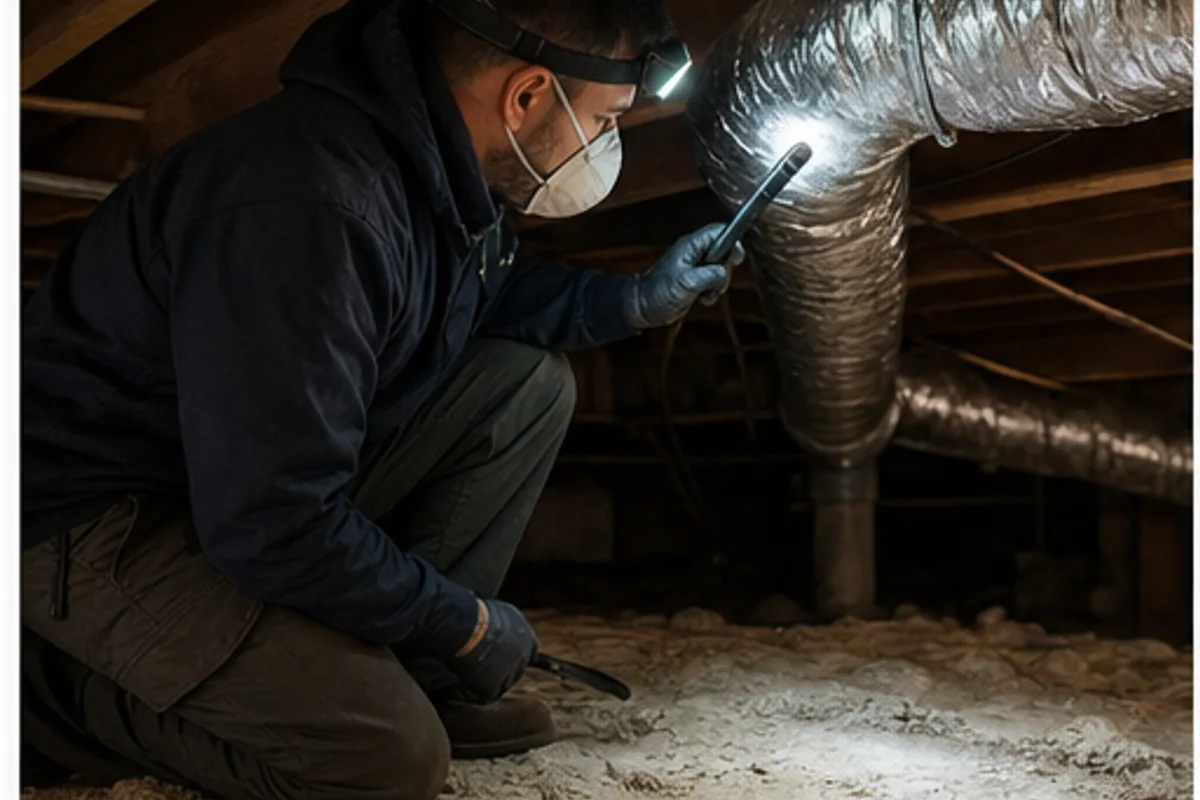
Short answer: Circuit & Cistern LA handles indoor air quality by checking the symptom, the system around it, and the local constraints that can change the repair. For this service, that means we improve filtration, ventilation, humidity control, odors, dust, and system cleanliness with HVAC-compatible upgrades.
The key risk is simple: high-MERV filters, UV gadgets, and portable purifiers only help when airflow, fit, source control, and run time make sense. That is why the page includes cost drivers, what can go wrong, permit context, utility overlap, homeowner prep, and local pages instead of only a generic "call now" pitch.
river-corridor dust, freeway adjacency, cooking load, and older returns can make filtration planning more valuable than gadgets. The visit starts with symptom photos, model labels, shutoff access, and the relevant route from the equipment to the panel, pipe, drain, duct, or exterior location.
filter rack fit
return leakage
MERV compatibility
source-control issues
ventilation strategy
Cost range and drivers
Typical planning range: $240 to $4 200. The low side usually assumes clear access, existing infrastructure that can stay, and no major hidden defects. The high side usually involves replacement equipment, utility involvement, difficult routing, permit or inspection sequence, concealed damage, or multi-trade coordination.
Repair, replacement, or retrofit sequence
Path
When it fits
What can change the scope
Repair
The equipment or fixture is serviceable and the failure is isolated.
Old parts, unsafe wiring, bad shutoffs, inaccessible cleanouts, or failed venting.
Replacement
The system is at end of life, unsafe, inefficient, or no longer compatible with the home.
Permits, HERS, panel capacity, pipe material, duct sizing, condensate, or gas sizing.
Retrofit sequence
Several home systems should be staged so one upgrade does not block the next.
EV charger, heat pump, HPWH, ADU, remodel, repipe, or whole-home rewiring plans.
Three indoor air quality misconceptions worth correcting
Misconception: A higher-MERV filter always improves air quality.
Reality: A MERV 16 filter on a system designed for MERV 8 raises static pressure 0.15 to 0.25 in.w.c., which can drop airflow below the 350 CFM/ton minimum and freeze the evaporator. The right path is a deep-pleated MERV 13 in a 4 inch or 5 inch media cabinet (Aprilaire 213 or 4400), not a 1 inch slot filter at the highest available rating.
Misconception: An ozone-generating air purifier sanitizes the home.
Reality: Ozone at concentrations effective against biological load is also a respiratory irritant, and CARB maintains a list of certified air cleaners that specifically excludes ozone generators marketed for occupied spaces. ASHRAE 62.2-2022 ventilation rates plus mechanical filtration are the documented path, not ozone.
Misconception: Mechanical ventilation is optional in older homes that breathe.
Reality: A 1928 craftsman in Bungalow Heaven that has had window replacements, attic insulation, and weatherstripping no longer breathes the way it did in 1960. ASHRAE 62.2-2022 sets a continuous ventilation rate of roughly 7.5 CFM per occupant plus 0.03 CFM per sq ft. A bath fan on a timer or a Panasonic WhisperGreen on a continuous low setting meets it; nothing else does.
What NOT to choose for indoor air quality in older basin homes
Avoid UV-C wand systems mounted only at the evaporator coil if the goal is whole-house particulate or VOC reduction. UV-C at the coil keeps the coil clean but does not address particulate that bypasses the filter. If the homeowner reads particulate matter at the air monitor, the answer is a media filter and a sealed return cabinet, not a UV bulb that has to be replaced every 9,000 hours.
Decline standalone HEPA tower units sized for a single bedroom marketed as a whole-home solution. A small tower at 220 CFM cannot move enough air through a 1,800 sq ft Pasadena home to matter. Either use a properly sized in-duct media filter or an HRV/ERV setup, but do not try to substitute a portable for a system-level solution.
Common upsell to refuse during indoor air quality
The bundled UV-plus-PCO-plus-bipolar-ionization stack at 1,800 to 2,800 dollars sells on combined effect claims that are not independently verified at the duty cycle of a residential blower. The defensible path is documented filtration (MERV 13 in a 4 inch cabinet), documented ventilation (ASHRAE 62.2 compliant fan), and documented source control (no medical claims, just measurable particulate and CO2 reduction).
The second pattern is the recurring filter subscription at 28 to 45 dollars per month for a filter that lists at 38 dollars on the manufacturer site. The subscription is the same filter on a calendar; the actual filter life depends on outdoor wildfire smoke days, pet load, and runtime, not the calendar. Buy filters direct and change on differential-pressure indication or visual inspection.
Verified homeowner reviews
Inspection-summary reviews from San Gabriel Valley Basin + East/Northeast LA River Corridor homes
Each review is also emitted in the page JSON-LD with a 1:1 match between visible and structured-data text. Author names use first name and last initial only, and ratings reflect the actual review (some 4-star reviews are included where homeowners flagged a real complaint that was resolved).
★★★★★Hossein D.Monterey Park
Brookside neighborhood, original 1949 house. Camera showed the lateral was Orangeburg from the foundation to the property line, completely deformed at 36 ft. Pipe burst was the right call here, they pulled SDR 35 PVC through 38 ft with one access pit and one receiving pit, restored the parkway, and Monterey Park Building and Safety signed off the lateral connection. Two-day project, fair pricing.
★★★★★Sopheap T.El Sereno
ADU over the garage near the Lakewood Drive area, our place is closer to City Terrace. 18,000 BTU single zone sized off a real Manual J at 14,200 BTU calculated load. They also installed the 60A subpanel feeding the ADU, ran the drain to the main lateral, and tied the new on-demand water heater into the existing 3/4 inch service. One coordinated permit instead of three.
★★★★★Tobias M.Monterey Park
3-ton Bosch IDS 2.0 in a 1965 home. The 125A panel had no spare slot, so a 100A subpanel went in alongside the main rather than a full upgrade, which Talia priced at $3,200 less than going to 200A. New 240V circuit, condensate to the laundry standpipe with an air gap, EPA HFC R-454B refrigerant. Two-day install, inspection passed first try.
Questions homeowners ask before booking
Why does Circuit & Cistern LA check air, power, and water together?
Older SGV and Northeast LA homes often have connected constraints. A heat pump may need panel capacity, a water-heater change may need venting or electrical work, and an AC leak may be condensate plumbing rather than refrigerant.
Is the booking form on this site?
No. Booking uses the external scheduler at https://nexfield.pro/crm/book?u=205. The site does not create a fake internal booking form.
What hours do you answer the line?
Standard dispatch is Monday–Friday 7:00 AM to 7:00 PM and Saturday 8:00 AM to 4:00 PM. After-hours emergency triage available 7 days a week for active leaks, sparking panels, no-cooling, no-heat, and gas-appliance concerns.
Do you publish a contractor license number?
License documentation is shared during the booking flow once a scope has been agreed. Inspector-facing paperwork (LADBS, Pasadena Permit Center, LA County Building and Safety) lists the responsible licensed contractor for the specific permit pulled.
Map the indoor air quality scope before approving the work.
Send the symptom, equipment photos, panel photo, shutoff location, access constraints, and urgency. The booking path stays external so there is no fake form and no invented phone number.