Air-system data points
- return-air path and filter-rack fit
- condenser clearance and disconnect condition
- condensate route and overflow evidence
- duct static, leakage, and register balance clues
- thermostat wiring and heat-pump control readiness
Quick answer: Circuit & Cistern LA provides indoor air quality in City Terrace with a retrofit-first check of the symptom, access, utility context, permit path, and related air, power, or water systems.
For this page, the service promise is practical: improve filtration, ventilation, humidity control, odors, dust, and system cleanliness with HVAC-compatible upgrades. The local reason is equally important: City Terrace sits in the Eastside LA, where hillside-edge homes, bungalows, duplexes, and older panels and steep streets, crawlspaces, and narrow drives can change labor, timing, and inspection readiness.
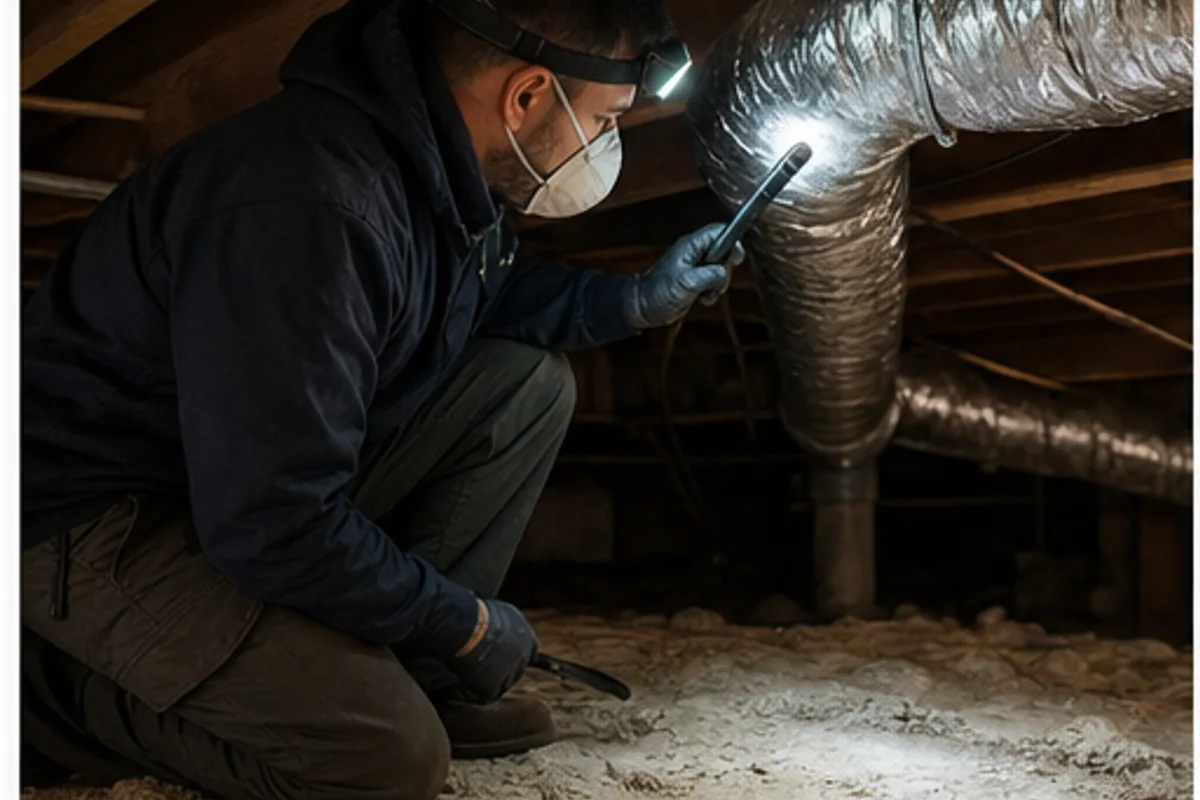
If the problem is active, unsafe, wet, hot, sparking, backing up, not cooling, not heating, or producing gas-appliance concerns, book the visit and include photos immediately. If it is not urgent, use this page to decide what needs to be checked before a technician prices the work.
The two things that most often change the job are the local home profile and the service-specific risk. In City Terrace, the local profile is hillside-edge homes, bungalows, duplexes, and older panels with steep streets, crawlspaces, and narrow drives. For indoor air quality, the risk is that high-MERV filters, UV gadgets, and portable purifiers only help when airflow, fit, source control, and run time make sense.
For HVAC work, the lowest-risk quote separates the failed part from airflow, condensate, controls, electrical support, and equipment placement. That matters in older basin homes because ducts and electrical circuits were often added decades after the structure was built. In City Terrace, that trade lens has to be merged with LADBS or county authority by address, LADWP or SCE by address with SoCalGas, and the local access pattern: steep streets, crawlspaces, and narrow drives.
Do not let the visit become a box-swap conversation before airflow, condensate, controls, and electrical support are checked. For indoor air quality, the first evidence should cover filter rack fit, return leakage, MERV compatibility. The planning range on this site is $240 to $4 200, but that number is only useful after access, existing system age, permit path, and related-trade dependencies are documented.
For indoor air quality in City Terrace, the first step is not buying a gadget. The visit should distinguish filtration, ventilation, humidity, duct dust, combustion appliance backdrafting risk, occupant sensitivity, and equipment compatibility so the recommendation does not overload the blower or miss the actual source.
The practical goal is to decide whether the first visit is a repair visit, a replacement estimate, an emergency stabilization, or a retrofit-readiness check. That choice affects parts, ladders, drain equipment, panel tools, camera gear, documentation, and whether work should stay open for inspection.
Era and stock: City Terrace is an LA County hillside pocket north of East LA, with housing built primarily between 1925 and 1965. Pre-war Spanish Colonial Revival and early ranch homes line the lower streets, and 1950s-1960s hillside tract homes climb the slopes above City Terrace Drive.
Housing mix: 1925-1940 Spanish and bungalow homes on the lower flats give way to 1950s-1965 hillside tract homes on cut-and-fill pads above. Lots range 5,000-8,000 sq ft, and many hillside parcels have caisson or stem-wall foundations with crawlspaces accessed from the downhill side.
Streets and landmarks: City Terrace Drive runs the ridgeline with views across the LA basin, and Eastern Avenue carries the main north-south traffic. The pocket sits above the 60 freeway and abuts Boyle Heights to the west and East LA to the south.
What drives most retrofits here: Federal Pacific Stab-Lok and Zinsco panels are common in the 1950s-1960s hillside tracts and drive a steady flow of panel replacements. Original cast iron drain stacks in the pre-war flats and aging galvanized supply lines on the hillside homes feed the repipe calendar.
Permit gotcha for City Terrace: LA County Building and Safety has jurisdiction, with hillside grading review triggered for steep parcels when service trenching or condenser pad work disturbs the slope. Utility jurisdiction also splits here -- some addresses are LADWP and others SCE, so verify before quoting service work.
This stack is why the page is not a doorway page. A indoor air quality visit in City Terrace has a different access, utility, permit, housing, and failure-mode profile than the same service in a coastal condo, Valley ranch home, or Westside estate canyon.
The most expensive mistake is approving a narrow repair before the surrounding constraint is understood. A component can be replaced while airflow stays bad, a fixture can be installed while the shutoff is failing, a charger can be mounted before the panel is ready, or a drain can be cleared while a broken lateral remains undocumented.
For indoor air quality in City Terrace, our first-pass checklist is filter rack fit, return leakage, MERV compatibility, source-control issues, ventilation strategy. That list is short enough to use during booking and specific enough to prevent most blind quotes.
The authority starting point for City Terrace is LADBS or county authority by address. Utility context is LADWP or SCE by address with SoCalGas. Depending on scope, the work may need a permit, plan review, utility service planning, rebate paperwork, HERS or energy-code documentation, or a final inspection. LADBS notes that work is not approved until inspected and accepted, and that covered or concealed work may need to remain visible.
That matters for homeowners because a cheaper visit can become expensive if drywall, stucco, trench, conduit, venting, or piping is closed before the right inspection stage.
| Driver | Why it matters locally | Homeowner action |
|---|---|---|
| Access | steep streets, crawlspaces, and narrow drives can increase setup time, ladder needs, parking coordination, or equipment route difficulty. | Send photos before booking and clear the path. |
| Existing system age | hillside-edge homes, bungalows, duplexes, and older panels often means mixed-era equipment, pipes, ducts, and wiring. | Send model labels and prior repair history. |
| Utility and permit path | LADWP or SCE by address with SoCalGas and LADBS or county authority by address influence sequence and documentation. | Ask whether the work is repair, replacement, or upgrade. |
| Service-specific risk | high-MERV filters, UV gadgets, and portable purifiers only help when airflow, fit, source control, and run time make sense. | Approve diagnosis before approving a large replacement. |
Planning range for indoor air quality: $240 to $4 200. This is not a guaranteed price; it is a useful starting range before access, condition, permits, and related trade needs are confirmed.
Call or book immediately if there is active leaking, sewage backup, burning odor, sparking, wet electrical equipment, no cooling during heat, no heat with a safety concern, repeated breaker trips, a gas smell, visible smoke, or water spreading into finished rooms. If natural gas is suspected, leave the area and follow utility emergency instructions from a safe location.
If the system works but is old, inefficient, noisy, undersized, or incompatible with a planned EV charger, heat pump, ADU, repipe, or remodel, use a retrofit check. Planned sequencing usually costs less than emergency replacement because panel, pipe, duct, venting, and permit issues can be solved before demolition or equipment ordering.
Each review is also emitted in the page JSON-LD with a 1:1 match between visible and structured-data text. Author names use first name and last initial only, and ratings reflect the actual review (some 4-star reviews are included where homeowners flagged a real complaint that was resolved).
Wanted ASHRAE 62.2-2022 ventilation rate compliance for a tightened envelope after our remodel. They put in a balanced fresh-air system with an Aprilaire 213 MERV 13 cabinet on the return side. Brookside house now has measurable outdoor air without the heating bill blowing up. Tech showed me the airflow readings at each register and left a printed commissioning sheet.
1918 Craftsman, full rewire including knob-and-tube replacement in the attic and crawlspace. They staged it room by room so we could keep living there. Plaster patches were thoughtful, multi-stage rough inspections passed each time, and the new Square D QO 200A panel directory is the cleanest I have seen.
Replaced a 50-gallon atmospheric tank with a Navien NPE-240A2 in the garage. Talia walked the gas line first and confirmed the existing 3/4-inch run wouldn't carry 199,000 BTU, so they upsized a section to 1-inch from the meter and added a sediment trap. Condensate routed to the laundry standpipe with a neutralizer, vent through the side wall with proper clearances, and the LADBS plumbing permit closed without a correction. Hot water at the kitchen now hits 120F in about 14 seconds with the recirc button.
LA County Building and Safety has jurisdiction, with hillside grading review triggered for steep parcels when service trenching or condenser pad work disturbs the slope. Utility jurisdiction also splits here -- some addresses are LADWP and others SCE, so verify before quoting service work. For indoor air quality specifically, equipment replacement, new circuits, repiping, panel work, water-heater replacement, and concealed work commonly need permit or inspection planning. LADBS or county authority by address is the starting point.
1925-1940 Spanish and bungalow homes on the lower flats give way to 1950s-1965 hillside tract homes on cut-and-fill pads above. Lots range 5,000-8,000 sq ft, and many hillside parcels have caisson or stem-wall foundations with crawlspaces accessed from the downhill side. Federal Pacific Stab-Lok and Zinsco panels are common in the 1950s-1960s hillside tracts and drive a steady flow of panel replacements. Original cast iron drain stacks in the pre-war flats and aging galvanized supply lines on the hillside homes feed the repipe calendar.
Send photos of the equipment, panel, shutoff, access path, symptom, model labels, and any previous repair notes. For City Terrace, include parking, alley, crawlspace, attic, garage, or HOA constraints because steep streets, crawlspaces, and narrow drives can change the dispatch plan.
City Terrace Drive runs the ridgeline with views across the LA basin, and Eastern Avenue carries the main north-south traffic. The pocket sits above the 60 freeway and abuts Boyle Heights to the west and East LA to the south. Note any cross-streets, gated communities, alley cleanouts, or hillside constraints in the booking note so the technician arrives ready for the actual route, not a curb-only assumption.
Yes. The site is built around air, power, and water coordination. A hvac visit can also note visible panel, pipe, drain, shutoff, duct, water-heater, or condensate issues that should be considered before a larger upgrade.
Send the symptom, equipment photos, panel photo, shutoff location, access constraints, and urgency. The booking path stays external so there is no fake form and no invented phone number.