Electrical costs for older SGV and Northeast LA homes.
Panel, EV charger, rewiring, lighting, and circuit costs depend on service capacity, routing, utility involvement, wall repair, and inspection scope. The purpose is not to promise a universal price. It is to show what must be checked before the number means anything.
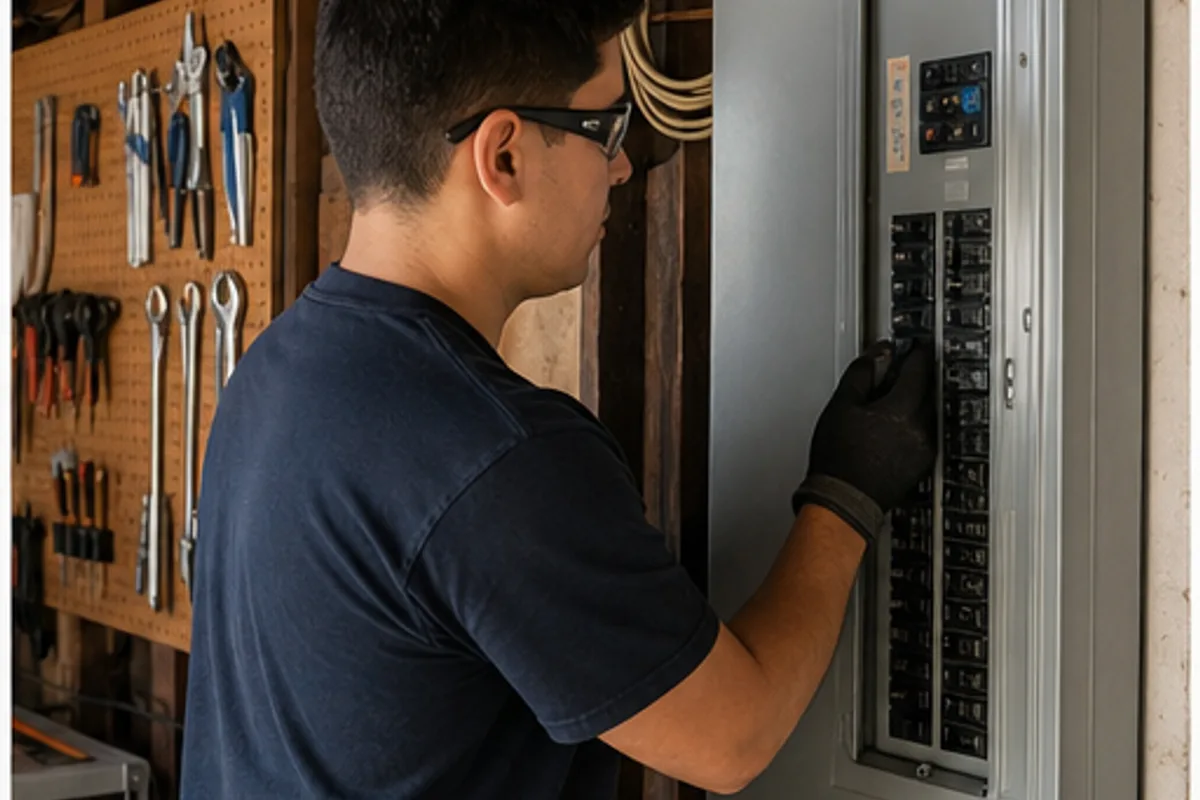
Electrical service ranges
| Service | Planning range | Common reason it changes |
|---|---|---|
| electrical panel upgrade | $2 800 to $12 500 | panel work can require utility coordination, meter location review, grounding updates, service clearance, and final inspection |
| EV charger installation | $850 to $6 800 | long conduit runs, detached garages, undersized panels, shared driveways, and utility assessments can change the cost |
| outlet and switch repair | $165 to $1 200 | device repair can expose cloth wiring, missing grounds, overloaded circuits, or unpermitted remodel work |
| lighting installation | $350 to $5 400 | old switch loops, no neutrals, shallow boxes, plaster ceilings, and exterior weather protection can complicate lighting work |
| whole-home rewiring | $9 500 to $52 000 | rewiring is not just pulling cable; access, plaster repair, circuit mapping, panel capacity, and staged inspections matter |
| dedicated circuits | $450 to $3 400 | new loads can overfill the panel or require GFCI/AFCI protection, conduit routing, and utility planning |
| generator and backup readiness | $650 to $14 500 | unsafe generator hookups can endanger utility workers and occupants; transfer equipment and load selection are the scope |
| emergency electrical repair | $240 to $4 200 | emergency electrical work often requires shutting down loads, isolating water intrusion, and documenting the repair for inspection |
Low-end jobs
Lower-cost jobs usually have clear access, intact infrastructure, available parts, no utility changes, no concealed damage, and no large permit or inspection sequence. The diagnosis still matters because a cheap repair that misses a system constraint can become the expensive path.
High-end jobs
Higher-cost jobs usually include replacement equipment, long routing, old material, service upgrade, structural or finish protection, trenching, patching, drain or sewer evidence, HERS or energy-code documentation, or multi-trade sequencing.
Electrical service-upgrade cost line items in San Gabriel Valley homes
The numbers below assume a 100A-to-200A residential service upgrade with a meter-main combo, permitted under NEC 2023 as adopted by the California Electrical Code 2022 cycle. LADWP territory installs schedule a cut-in card; SCE territory (Alhambra, Monterey Park, Rosemead, El Monte and other SGV cities) coordinates a service disconnect; PWP customers in central Pasadena work directly with Pasadena Water and Power.
| Line item | Range (USD) | What changes the number |
|---|---|---|
| Equipment — panel + breakers + Type 1/2 surge | $900 – $3,200 | NEC 230.67 now requires a surge protective device on dwelling services; copper-bus 200A panels with AFCI/GFCI dual-function breakers across the schedule sit at the top of the range. |
| Labor (LADWP cut-in day + interior) | $1,400 – $4,200 | A cut-in day is a fixed 4–6 hour window with two licensed electricians on site; interior work to NEC 230.85 emergency-disconnect spec adds hours when the panel is moving from inside to outside. |
| Permit + plan check | $300 – $1,100 | LADBS combination electrical permit covers the low end; Pasadena Permit Center, San Marino, and historic-overlay districts in Bungalow Heaven or Highland Park add design review and push the cost up. |
| Utility coordination + meter spot + cut-in card | $200 – $1,400 | LADWP requires a meter-spot inspection before the cut-in card releases; SCE service planning lead times have run 6–14 weeks recently and reschedules are billed. |
| Service entrance conductor + grounding electrode | $250 – $850 | 4/0 aluminum or 2/0 copper SE conductor sized per NEC 310.12; grounding electrode system per NEC 250.50 (ground rod pair plus concrete-encased electrode where accessible) drives material cost. |
| Disposal + relocation of obsolete panel | $150 – $450 | FPE Stab-Lok and Zinsco panels (common in Highland Park, Eagle Rock, El Sereno, and 1960s SGV tracts) carry a documented removal premium and cannot be reused as a subpanel. |
| Drywall / stucco patching at meter relocation | $200 – $1,800 | Moving the meter from a front porch to an exterior side wall (typical in San Marino and Pasadena Bungalow Heaven for HOA aesthetics) requires stucco color-match and lath repair. |
| Inspection contingency + corrections | $200 – $900 | NEC 230.85 disconnect labeling, NEC 408.4 panel directory legibility, and working-clearance corrections per NEC 110.26 are the most common rejections on first inspection. |
The labor and utility-coordination rows compose most of the SGV variance. A clean alley-fed 1950s tract home in Temple City might land at the floor of every row. A 1908 Craftsman in Highland Park with knob-and-tube branch circuits, a service mast through a clay-tile roof, and FPE remediation easily pushes equipment, labor, and patching simultaneously, and a Pasadena historic overlay can add 4–6 weeks of plan check on top.
Minimum-legal vs comfort-grade electrical service upgrade
Both columns pass a final inspection under NEC 2023 / California Electrical Code 2022 cycle. Only the right column gives a San Gabriel Valley home headroom for the realistic 2026–2032 retrofit sequence: induction range, heat-pump HVAC, heat-pump water heater, Level 2 EV charger, and possibly a battery.
| Scope category | Minimum legal install | Comfort-grade install |
|---|---|---|
| Service capacity | 100A service kept if existing load calc per NEC 220.83 still passes; no future-load consideration; meter-main left where it is. | 200A service standard for any home with planned EV / heat pump / HPWH; load center sized with spare slot allocation per phase; meter-main relocated to comply with NEC 230.85 emergency disconnect. |
| Breaker selection | Standard thermal-magnetic breakers on existing branch circuits; AFCI/GFCI only where code-required at minimum. | Dual-function AFCI/GFCI on all 120V 15/20A branch circuits per NEC 210.8 and 210.12, dedicated breakers on bathroom, laundry, garage, and kitchen circuits, copper-only torque verification per NEC 110.14(D). |
| Grounding / bonding | Existing ground rod reused; bonding jumper at the panel; no concrete-encased electrode if not already present. | Two driven ground rods 6 ft apart per NEC 250.53(A)(2), supplemental concrete-encased electrode where slab is exposed, intersystem bonding terminal per NEC 250.94 for cable / fiber / antenna bonding. |
| AFCI / GFCI coverage | Code-minimum AFCI on bedrooms; GFCI on kitchen and bathroom outlets; no extension to legacy circuits. | AFCI extended to all habitable spaces, GFCI extended to garage, basement, exterior, and laundry per current NEC, dedicated GFCI on dishwasher and disposal circuits common in SGV remodels. |
| Surge protection | Plug-in strip surge at sensitive equipment; no service-entrance SPD. | Type 1 or Type 2 SPD at the service entrance per NEC 230.67 (now mandatory on dwelling services), Type 3 SPD at panels feeding sensitive electronics, coordinated joule rating across both stages. |
| Future-load planning | No EV circuit roughed in; HVAC and HPWH circuits sized for current equipment only. | EV-ready 60A or 80A circuit roughed to garage / driveway per CALGreen, dedicated 30A 240V HPWH circuit, dedicated 50A range circuit if cooktop conversion is on the 5-year plan, panel directory legible per NEC 408.4. |
The comfort-grade path costs roughly 30–45% more on the install ticket. The trade is that the homeowner doesn't pay a second permit cycle, a second LADWP or SCE cut-in, and a second drywall patching ticket the next time a retrofit hits the panel. In an SGV market where the realistic decade-out load is roughly double today's draw, the headroom math wins inside 5 years.
What changes an electrical quote by ±$3,000 or more
Below are the SGV / NELA factors that consistently move a service-upgrade or panel-replacement quote outside the line-item table above. Each reflects a recurring situation in this service area rather than a generic national assumption.
- +$1,800 to +$4,200: LADWP cut-in card scheduling delays pushing the install across two trip days, plus the rescheduled service-disconnect window — routine on busy weeks at the LADWP service-planning desk.
- +$2,200 to +$4,800: FPE Stab-Lok or Zinsco panel removal premium with documented hazard handling, common in older Highland Park, Eagle Rock, El Sereno, and 1960s SGV tract homes.
- +$3,500 to +$8,000: underground feeder reroute when the meter is moved off a front porch to a side wall — typical in San Marino and Pasadena Bungalow Heaven historic-overlay areas where front-porch meters are not allowed by HOA aesthetics review.
- −$1,500 to −$3,500: SCE Charge Ready Home rebate plus federal 30C credit on EV-circuit installs, when filed before the panel work begins rather than retroactively.
- +$2,400 to +$5,800: aluminum branch-wiring remediation premium on 1965–1972 SGV tract homes, including AlumiConn or COPALUM connectors at every device and arc-fault testing per NEC 210.12.
- +$1,500 to +$3,500: service-mast replacement when the existing riser is corroded, undersized for 200A, or penetrates a clay-tile roof requiring a tile-trade sub for the flashing detail.
- +$2,000 to +$4,500: detached garage or ADU subpanel run distance over 50 ft, requiring trenched 1-1/4 inch PVC conduit per NEC 300.5 with #2 Cu or 1/0 Al feeders and a separate grounding electrode at the structure per NEC 250.32.
- +$1,200 to +$2,800: NEC 230.85 emergency-disconnect compliance on installs where the existing service entrance lands inside the structure — the new outdoor disconnect, weatherhead, and labeling add a discrete line item.
- +$2,500 to +$6,000: knob-and-tube remediation on pre-1940 Craftsman homes in Highland Park, Mount Washington, and Bungalow Heaven, including insurance-required rewire of habitable-space branch circuits.
- −$500 to −$1,500: combining a panel upgrade with a planned solar / battery install in the same permit cycle, eliminating a duplicate plan check and a duplicate LADWP coordination fee.
Inspection-summary reviews from San Gabriel Valley Basin + East/Northeast LA River Corridor homes
Each review is also emitted in the page JSON-LD with a 1:1 match between visible and structured-data text. Author names use first name and last initial only, and ratings reflect the actual review (some 4-star reviews are included where homeowners flagged a real complaint that was resolved).
Two bathroom remodels worth of fixtures in one big day. Toto Aquia IV Cube wall-mount style on each, two Delta Multichoice R10000-UNBX rough valves preset, vanity faucets, p-traps. They flagged that one of the existing closet flanges was cracked and replaced it before setting the toilet rather than just sending it on a wax ring. Solid call, no rocking, no leaks at follow-up.
1952 home near the river. 2.5-ton Daikin Aurora with a 125A panel addition because the original split-bus had no spare slot for a 240V breaker. LADWP cut-in 8 days out, meter pulled at 08:50 and reset by 13:15, inspector signed off the combination inspection same day. Title 24 Part 6 §150.2(b) compliance documented.
Replaced a 5-ton beast with a properly sized 3.5-ton Carrier Infinity 26 after the load calc came back honest. Title 24 Part 6 §150.2(b) alteration path was followed, HERS rater showed up on schedule, and the duct leakage test passed at the threshold. Crew protected the floors and the new whip and disconnect re-routed off the side-yard fence looks tidy. Whole-house feels more even now.
Questions homeowners ask before booking
Why does Circuit & Cistern LA check air, power, and water together?
Older SGV and Northeast LA homes often have connected constraints. A heat pump may need panel capacity, a water-heater change may need venting or electrical work, and an AC leak may be condensate plumbing rather than refrigerant.
Is the booking form on this site?
No. Booking uses the external scheduler at https://nexfield.pro/crm/book?u=205. The site does not create a fake internal booking form.
What hours do you answer the line?
Standard dispatch is Monday–Friday 7:00 AM to 7:00 PM and Saturday 8:00 AM to 4:00 PM. After-hours emergency triage available 7 days a week for active leaks, sparking panels, no-cooling, no-heat, and gas-appliance concerns.
Do you publish a contractor license number?
License documentation is shared during the booking flow once a scope has been agreed. Inspector-facing paperwork (LADBS, Pasadena Permit Center, LA County Building and Safety) lists the responsible licensed contractor for the specific permit pulled.