HVAC in Monrovia
Cooling and heating work should account for duct age, return sizing, condenser placement, thermostat wiring, condensate, and panel capacity.
Local answer: Monrovia homes need air, power, and water repairs that respect City building authority, SCE and SoCalGas with local water-provider context, and the realities of older bungalows, ranch homes, and additions.
Access matters here: crawlspaces, detached garages, and side-yard condensers. That affects how a technician stages ladders, drain equipment, conduit, refrigerant lines, shutoff tools, water-heater parts, camera gear, or panel work.
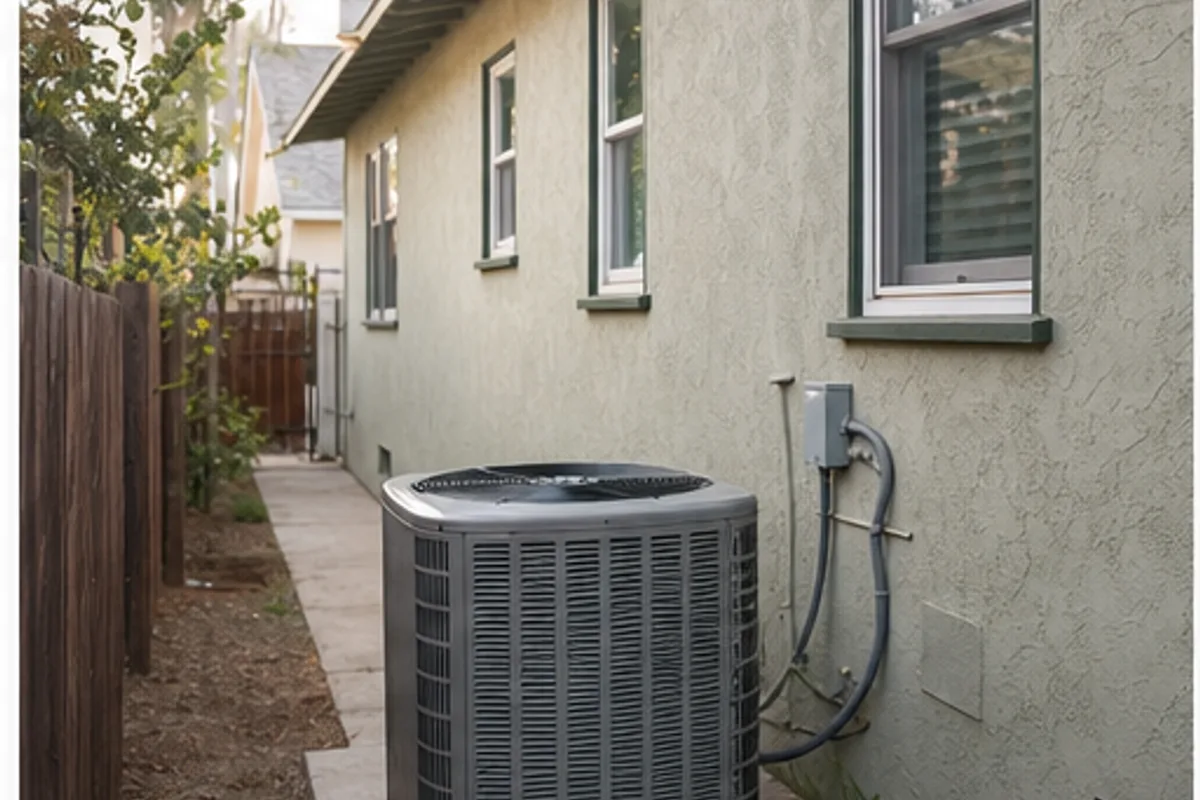
retrofit work should separate simple service repairs from permit-triggering equipment replacement. That single local detail changes how estimates should be written. A vague "repair near me" quote is weaker than a scope that notes the authority, utility, equipment location, access, shutoffs, and whether the work may be concealed before inspection.
Many homes in this region were built or remodeled across different eras. A property can have old ducts, a newer condenser, a full panel, partial repiping, old drains, a recent water heater, and unmarked breakers all at once. The visit has to identify the real failure without accidentally creating a bigger one.
Cooling and heating work should account for duct age, return sizing, condenser placement, thermostat wiring, condensate, and panel capacity.
Panel, EV charger, rewiring, circuit, outlet, and lighting scopes need load, route, grounding, and utility coordination checks.
Water heater, drain, sewer, leak, repipe, and fixture repairs should start with shutoffs, pipe material, venting, and cleanout access.
Era and stock: Monrovia was incorporated in 1887 as one of the oldest cities in LA County, and its housing stock spans every era from 1890s Queen Anne and Craftsman in Old Town through 1920s Spanish Revival in the foothill streets, dense 1950s ranch tracts in the southern flats, and modern infill near the Gold Line station. Few SGV cities carry this much architectural range.
Housing mix: Pre-1930 Craftsman and Spanish bungalows of 1,200 to 2,000 square feet on the foothill grid, with postwar ranches and split-levels dominating south of Huntington Drive. Typical retrofit candidate is a Craftsman with knob-and-tube remnants behind plaster and an original gravity furnace footprint in the basement.
Streets and landmarks: Myrtle Avenue runs the heart of Old Town past the 1925 Aztec Hotel and the Library Park bandshell, while Foothill Boulevard and Huntington Drive carry the east-west traffic. Canyon Boulevard climbs into the wilderness park trailhead, and the Gold Line station anchors the southern transit-oriented blocks.
What drives most retrofits here: Foothill-belt water at 18 to 22 grains scales tankless heat exchangers fast, and the pre-1930 housing stock layers knob-and-tube, early conduit, and 1960s rewires inside the same wall cavity. The combined driver is full electrical service replacement with proper grounding while opening walls for mini-split refrigerant lines and dedicated HVAC circuits.
Permit gotcha for Monrovia: Monrovia Building Division enforces a Historic Preservation Overlay Zone across portions of Old Town, so window, exterior penetration, and condenser-placement decisions need design review before a permit issues. Even a heat-pump conversion can stall four to eight weeks if the outdoor unit is visible from a contributing streetscape.
Local conditions in Monrovia change estimates more than most homeowners realize. The cluster is SGV basin and foothill edge. Permit authority sits with City building authority. Utility context is SCE and SoCalGas with local water-provider context. Housing stock here is older bungalows, ranch homes, and additions, and access is the deciding factor: crawlspaces, detached garages, and side-yard condensers.
retrofit work should separate simple service repairs from permit-triggering equipment replacement. That single detail is why a quote written off an address in Monrovia should look different from the same job in a tract subdivision twenty minutes away. The visit prep should reflect that.
| Trade | Most common Monrovia retrofit driver | Permit / authority touchpoint |
|---|---|---|
| HVAC | For AC replacement in Monrovia, the estimate should not start with tonnage alone. | City building authority mechanical permit; CEC 2025 Energy Code applies to permit applications dated on or after January 1, 2026. |
| Electrical | For an electrical panel upgrade in Monrovia, the estimate should map loads and future loads before anyone promises a panel size. | City building authority electrical or combination permit; utility coordination via SCE and SoCalGas with local water-provider context. |
| Plumbing | For repiping in Monrovia, the quote should describe pipe material, access, fixture count, shutoff strategy, patching, pressure issues, water-heater connection, and inspection sequencing. | City building authority plumbing permit; LACoPW lateral connection oversight on sewer scope when applicable. |
Each review is also emitted in the page JSON-LD with a 1:1 match between visible and structured-data text. Author names use first name and last initial only, and ratings reflect the actual review (some 4-star reviews are included where homeowners flagged a real complaint that was resolved).
Ecobee Premium plus a Sense energy monitor on the new 200A panel. The thermostat retrofit also flagged that the existing 24V transformer on the air handler was undersized for the new heat-pump call, so they replaced it during the same visit. Small thing the original installer would have missed.
Big project. Rewire, repipe, AC replacement, all at once on a 1916 home. Took a star off because the schedule slipped from 5 weeks to 7 weeks, mostly on the plumbing rough-in waiting for slab patches to cure. Talia communicated every delay with photos and an updated Gantt. Final result, plaster patches matched, no nail pops, and the Pasadena Permit Center signed off all three trades on consecutive Mondays. Madison Heights neighborhood.
1951 hillside on Cypress Ave. The old AC quote we had was a straight swap. Talia pulled the return grille, measured 0.84 in. w.c. static, and refused to put a new 3-ton on a duct system that would kill it again. Added a return drop, a hard-start kit only after verifying it was actually needed, and replaced a corroded electrical disconnect at the condenser pad. Two-day project instead of one, but it is the first summer the upstairs has matched the thermostat.
Older SGV and Northeast LA homes often have connected constraints. A heat pump may need panel capacity, a water-heater change may need venting or electrical work, and an AC leak may be condensate plumbing rather than refrigerant.
No. Booking uses the external scheduler at https://nexfield.pro/crm/book?u=205. The site does not create a fake internal booking form.
Standard dispatch is Monday–Friday 7:00 AM to 7:00 PM and Saturday 8:00 AM to 4:00 PM. After-hours emergency triage available 7 days a week for active leaks, sparking panels, no-cooling, no-heat, and gas-appliance concerns.
License documentation is shared during the booking flow once a scope has been agreed. Inspector-facing paperwork (LADBS, Pasadena Permit Center, LA County Building and Safety) lists the responsible licensed contractor for the specific permit pulled.
Send the symptom, equipment photos, panel photo, shutoff location, access constraints, and urgency. The booking path stays external so there is no fake form and no invented phone number.